

The conversation almost always starts with a neighbor's sale.
The El Dorado over on the next loop closed in the spring. We have the same model. That is our number, right?
It is a fair thing to assume, and it is the honest starting point for almost every conversation about Leisure Village home values. In most places you could not even ask the question that cleanly. The 2026-27 dues schedule lists 2,136 homes here across twenty-five model variants. Some of those models are everywhere — 244 El Dorados, 219 Amalfis, 218 Capris. Others barely exist: four Camarillos, four of the Coronado III, thirteen of the free-standing Monterey.
So the first thing worth knowing is which of those you own, because it determines whether you have a rich set of comparable sales to work from or almost none.
Either way, the question is sharper here than elsewhere. It is not simpler.
The honest answer is that your neighbor's sale tells you a great deal about the range your home lives in and very little about where inside that range yours will land. Those are two different pieces of information. Confusing them is the most common way a Leisure Village listing ends up sitting on the market while the seller waits for a number that was never on the table.
Here is how we actually work through it.
Why This Question Comes Up Here More Than Anywhere Else
Thirty-five villages, most of the construction dating to 1978, and a shared set of original plans. People here talk about their homes by model name — Del Mar, Capri, El Dorado, Valencia — and everyone in the room knows what that means.
In a conventional subdivision, an appraiser goes looking for comparable properties and settles for approximate. Different lot size, different bedroom count, an addition somebody put on in 1994. The comparison is always a little bit of an argument.
Inside the gates, the comparison starts out exact. Same plan, same layout, same year, same bones. That precision is a genuine advantage, and I would not trade it.
It is also a trap. When two homes are identical on paper, every dollar of difference between them has to be explained by something that is not on paper. And sellers, understandably, do not always want to hear what that something is.
What the Model Tells You, and Where It Stops
The model sets the boundaries. The footprint, whether the laundry is indoors or out in the garage, whether there are steps at the entry, how many cars fit in the garage. Interiors get reworked all the time here — kitchens opened up, bathrooms redone, dens reworked — but the envelope the home sits in does not move.
It also sets your dues, which is worth pausing on, because it is the piece most sellers have backwards. Dues here are assigned by model and they scale with the size of the plan — $671 a month at the small end on the Avalon, $1,014 at the top on the La Jolla, everything else falling in line between. Your neighbor across the loop in the same model pays exactly what you pay. Where you sit in the community does not change it.
Which means dues are not what separates two sales of the same model. They drop out of that comparison entirely. They matter enormously to a buyer choosing between models, and not at all to a buyer choosing between two Capris.
But be certain you know which variant you own. This is where people get it wrong. A standard El Dorado pays $865 a month. An El Dorado I with the two-car garage pays $944. Those are different homes on the schedule, they are larger, and they are not comparable sales to each other. The same goes for the Capri and the Capri 2-Car, the Monterey and the free-standing Monterey I, and the three Coronado variants. If you comp across that line, your number is wrong before you start.
And be careful with square footage. The figures published for this community are not always accurate, and we would not price a home off them without checking. There is a related trap worth naming plainly: an enclosed patio is not square footage. Owners sometimes convert one and begin thinking of the home as larger, but that work is generally not permitted, and a room does not become living area because somebody finished it. Counting it is a problem for the seller, not the buyer. If your home has one, it is a feature worth showing — it is simply not a bigger number.
So the model gives you a floor and a ceiling. That is real information and it is worth having before you do anything else.
What the model does not give you is the number. Two El Dorados that are structurally the same home can trade for meaningfully different figures in the same quarter, and the gap is not noise. It is condition, position, terms, and timing — in roughly that order of impact.
The Four Things That Move a Home Inside Its Range
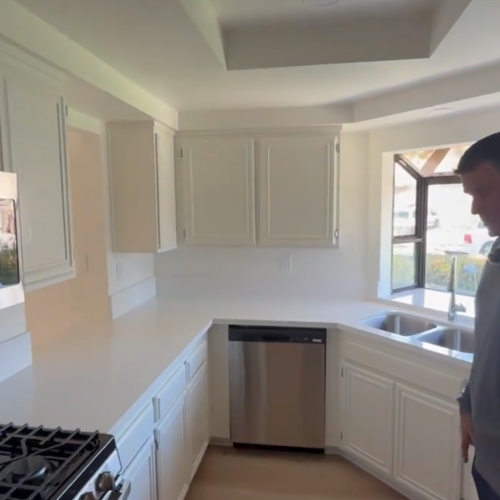
Condition, and specifically visible condition. Ceilings, flooring, paint, kitchen surfaces, bathroom finishes, lighting. Buyers here are not pricing your plumbing. They are pricing what they can see from the doorway, and a home with popcorn ceilings and carpet reads as a project before anyone has opened a cabinet. This is the largest single variable and it is also the only one on this list you can do anything about.
Where the home sits. Greenbelt frontage or a view of the carports. The distance from your door to the recreation center. Corner versus interior. Whether there are steps between the parking and the entry. Buyers in a 55+ community weigh that walk far more heavily than buyers in their forties do, and they are right to. Two identical floor plans in different villages are not the same product.
The terms, not just the price. Two identical homes can close at the same number and leave the sellers in very different places. Cash or financing. Whether the buyer needs to sell something first. How long escrow runs, whether you need time in the house after closing, who is handling the cleanout. A slightly lower offer with certainty attached is often the better deal, and the headline price on your neighbor's sale tells you nothing about what they gave up to get it.
The week you list into. If two other homes in your model are already on the market, you are in a three-way comparison and the buyer sets the terms. If yours is the only one available and somebody has been waiting for that floor plan, the arithmetic reverses. This one is luck, mostly. But it is luck you can sometimes wait out, and knowing which situation you are in is worth more than a marketing plan.
Why Condition Carries More Weight Here Than Almost Anywhere
In a normal neighborhood, a buyer comparing an updated house to a dated one is also comparing two different floor plans, two different streets, two different lot sizes. The condition difference gets blurred into everything else.
Here it does not blur. A buyer shopping the El Dorado can walk through three of them in one afternoon — same rooms, same dimensions, same windows in the same walls. One has smooth ceilings and new floors and one does not. There is nothing else for the difference to hide behind.
That cuts in both directions, and this is the part worth sitting with. It means a dated home gets discounted harder here than it would elsewhere. It also means an updated home gets credited more cleanly, because the buyer can see exactly what they are paying for and exactly what they are being spared. The spread between the top and the bottom of a single model's range is wider in this community than most sellers expect.
What We Would Look At First
The order we work in, before anyone says a number out loud:
- Pull every recent sale of your exact model — not the community, not the price band, and not the neighboring variant. In a place like this, a comparable that is not your floor plan is barely a comparable at all.
- Rank those homes by condition, honestly. Photos, listing remarks, and where we have been inside, what we remember. This is the step people want to skip.
- Place your home in that stack before discussing price. Top third, middle, bottom third. That placement, more than any square-foot calculation, is what determines your number.
- Then decide what to do about the placement. Move up the stack with targeted work, or price into where you honestly sit. Both are legitimate. Pretending you are higher in the stack than you are is not, and the market tends to correct it faster than sellers expect.
When Your Neighbor's Number Really Is Your Number
We would not be doing you any favors if the whole point of this were "your comp is wrong, call us."
Sometimes it is exactly right. If the home that sold was your exact model, in comparable condition, in a similar spot, and it closed recently, then that number is your number and there is not much more to discuss. When that is the case we will tell you so quickly, and we will not manufacture a reason to add to it.
Sometimes it runs the other way. We have looked at a neighbor's closed sale and told a seller their home should do better than that one — because the neighbor listed into a crowded month, or priced from a website estimate, or had a home in better shape than the marketing suggested. Leaving money on the table is just as common as reaching for money that was never there.
And sometimes the right answer is not to sell at all this year. If two of your model are already sitting unsold, the useful advice is often to let those clear first.
We have given that advice and watched where it goes. Sometimes the seller waits and lists later. Sometimes they decide the numbers work better keeping the home and renting it out, and the sale never happens. More than once we have talked a client all the way out of the transaction we were sitting there to win.
That is the job. If the honest read is that selling right now is not in your interest, you should hear it from us, and you should hear it before you have paid anyone for anything.
The Part That Is Not About the Number
There is a version of this conversation that is entirely about maximizing price, and there is a version that is not.
A fair share of the sales we handle here involve a trust, an estate, a parent moving to assisted living, or an adult child managing the whole thing from another state. In those situations, speed and certainty are worth real money — sometimes more than the top of the range is worth. Choosing a clean, fast close over the last few thousand dollars is not a failure of negotiation. It is a decision about what the family actually needs, and it deserves to be made deliberately rather than by default.
The job is to put both numbers in front of you and be straight about the tradeoff. Not to talk you into the higher one.
Before You Anchor on a Number
If a home in your model recently sold and you are trying to work out what it means for yours, that is a twenty-minute conversation, not a listing appointment.
We will walk your home, tell you where it honestly sits against the other sales of that floor plan, and tell you what we think it does as-is versus with work. If the answer is that your neighbor's number is your number, you will hear that. If the answer is that you should wait six months, you will hear that too.
No cost, no pressure, and we are glad to have the conversation for a move that is still a year or two out.
McKay Barlow, Barlow Realty Group — 805-977-6716
Serving Leisure Village, Camarillo, Ventura, Oxnard, and surrounding Ventura County communities.
Not sure which variant you own, or what it pays in dues? The full model and dues schedule is here, along with every floor plan in the community.
Check out this article next